Card Games for Kids 6 and Up: 7 Hits That Need No Reading
· boardgame.tips Editorial Team
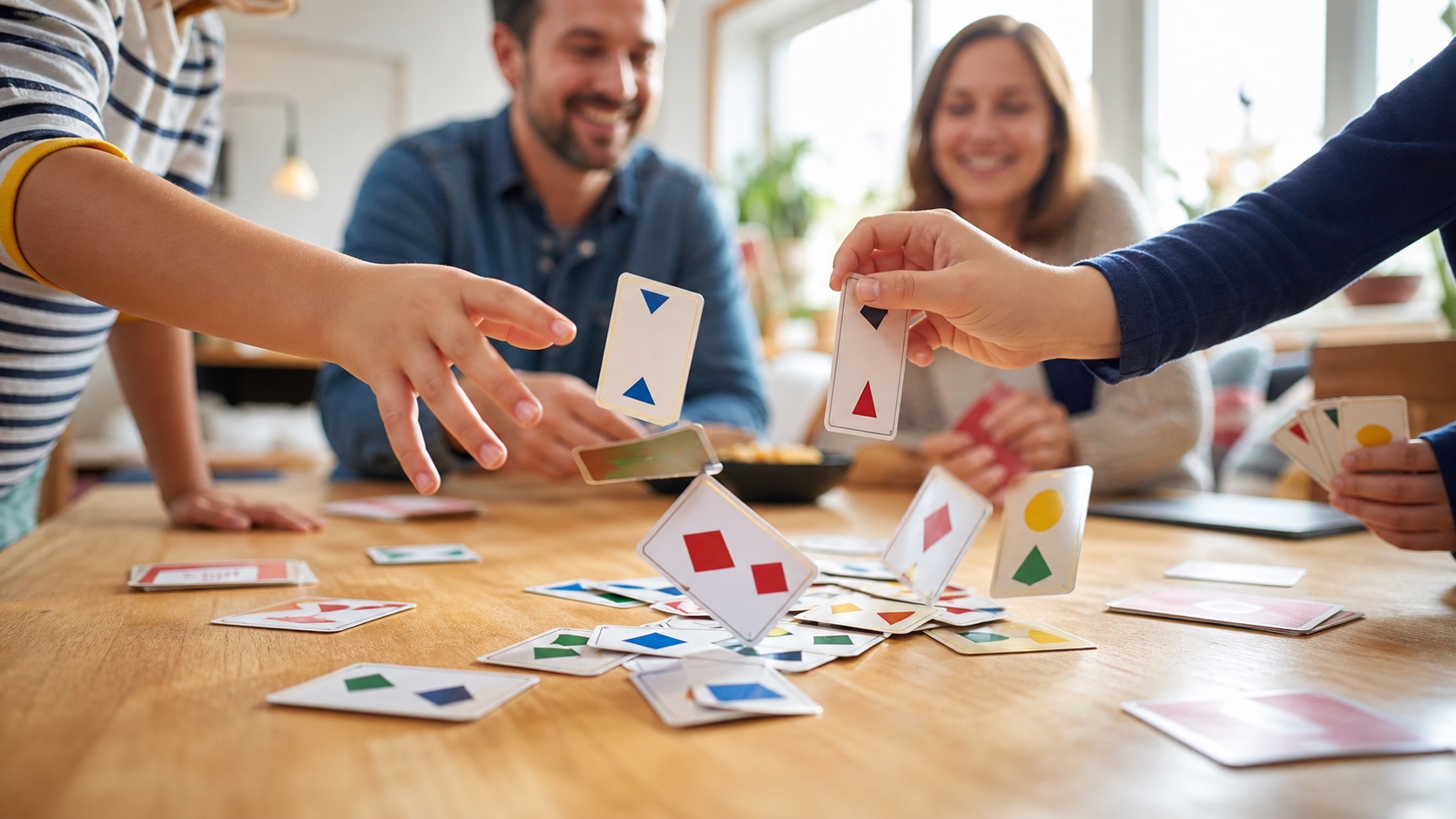
The best card games for kids 6 and up run on colors, symbols and speed rather than text: UNO, Halli Galli, Ghost Blitz, Cockroach Salad, Skip-Bo Junior, Die kleine Hexe and Cheating Moth. All seven are explained in a few minutes, need no reading skills and are just as much fun with adults as among kids. That's exactly what makes them safe gift picks and loyal travel companions.
A lot happens at once around age six: school is starting, reading is only slowly coming along, but understanding rules and getting caught up in the game already works really well. So which cards fit this stage?
Key takeaways
- Good card games for ages 6 and up rely on pictures and symbols, not text, so beginning readers can join in right away.
- Short rounds of 5 to 15 minutes hold attention and are easy to replay.
- Reaction games like Halli Galli or Ghost Blitz give kids a real chance against adults.
- A game should be explainable in two or three minutes; anything longer slows the fun.
- Most titles cost under 15 euros and fit in any bag.
What matters in card games for ages 6 and up?
The key is that a child can play right away without reading fluently. Cards with clear colors, animals or numbers deliver that; long action texts don't. Add a short play time, so a second and third match fit in before patience runs out.
Fairness across ages matters just as much. Reaction and luck games favor no one: whoever grabs faster or draws the better card wins, and a six-year-old pulls that off as often as her dad. If you want to go deeper, our overview of the best card games also has titles for older kids and adults.
The 7 best card games for kids 6 and up
Here are seven classics and modern hits that have proven themselves in everyday family life. Each title is sturdy, affordable and ready to go in minutes.
UNO - The all-time evergreen. It's all about colors and numbers, so kids need no reading skills. Whoever is down to their last card shouts "UNO", and that moment alone gets the giggles going. Quick to explain, endlessly replayable and available in countless special variants.
Halli Galli - Four players take turns flipping fruit cards. As soon as exactly five of the same fruit are showing, you slap the bell. Pure reflexes, no advantage for age, and the bell in the middle of the table makes every round gloriously loud. A reliable party hit for the whole family.
Ghost Blitz (Geistesblitz) - Five wooden figures stand ready, and a card shows objects in the right or wrong colors. Whoever grabs the matching piece fastest wins the card. It twists your brain in the best way and is also known as a "speed" variant. Reflexes and concentration in one.
Cockroach Salad (Kakerlakensalat) - A stack of vegetable cards, plus ban cards that block certain words from being said. You have to name out loud what you play, unless it's banned at that moment, in which case the substitute word applies. Sounds simple, but it causes wonderful slips of the tongue and fits of laughter at the table.
Skip-Bo Junior - The kid-friendly version of the number classic. Piles are built in ascending order, and the numbers are large and colorful. Ideal from about five or six years old for a playful feel for sequences, with no frustration from text-heavy rules.
Die kleine Hexe - A lovingly designed card game around the well-known little witch character, often from the Klett or Kosmos world. It combines picture motifs with simple collecting and discarding mechanics and is a perfect thematic fit for preschoolers and first graders who know the stories.
Cheating Moth (Mogel Motte) - Here cheating is explicitly allowed. Cards may secretly disappear while the moth guard keeps watch. Whoever gets caught takes the penalty. A cheeky concept kids love, because for once they're allowed to trick within the rules.
This mix covers every mood: frantic reactions, loud laughter and calmer collecting. If you're looking more for classic trick-taking games and card classics, take a look at the classic card games; many of them work from about age eight.
How do you introduce kids 6 and up to card games?
The easiest entry is a reaction or luck game, because nobody can outplay the child on experience there. Start with a shortened round, explain the rules while playing rather than all at once up front, and simply let mistakes slide.
A proven trick: after the first round, have the child explain the rules again in their own words. That cements understanding and makes them proud. When playing with younger siblings, you can lay cards face up or play in teams. When interest grows beyond cards, our pick of the best board games for kids is the next step.
Frequently asked questions
At what age can kids play UNO or Halli Galli?
UNO and Halli Galli run smoothly for most kids from about age six, and many start at five. Neither uses text: UNO works through colors and numbers, Halli Galli through counting up to five matching fruits. That makes them ideal first games.
Which card games work if the child can't read yet?
Go for titles that run purely on pictures, colors and symbols: Halli Galli, Ghost Blitz, UNO or Cockroach Salad. No card carries action text; everything is about recognizing and reacting. That way beginning readers play on equal terms right away.
Are these card games interesting for adults too?
Yes, and that's their big advantage. Reaction games like Ghost Blitz or Halli Galli challenge adults too, because speed counts instead of reading ability. You'll find titles like these that bridge generations collected in the best family games.
Bottom line
Card games for ages 6 and up need to do one thing above all: get going right away without reading. UNO, Halli Galli, Ghost Blitz, Cockroach Salad, Skip-Bo Junior, Die kleine Hexe and Cheating Moth all deliver, each in its own way, from the frantic bell slap to cheeky cheating.
If you want to give a single game, Halli Galli or UNO is almost never wrong: both are affordable, explained in minutes and loved for years. And as the collection grows, our best card games are worth a look for the next addition.