Metro
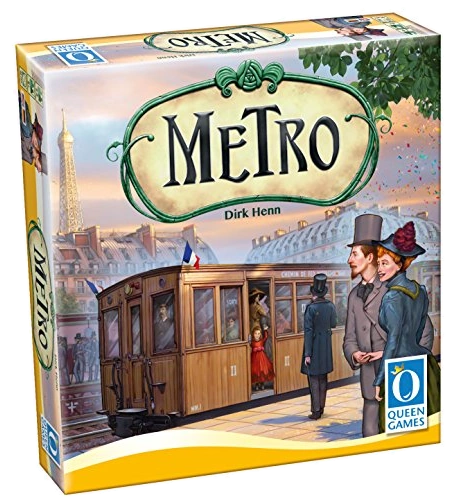 *
- 2–6 players · best with 2
- 30 min
- ages 8+
- Complexity: light
- no in-game text
 *




- Two players – the best count, players say
- Families with kids – ages 8+, light to learn
- Newcomers – clicks after one practice round
- Hobby gamers – too light to carry an evening
Metro is a strategic tile-placement board game where players build rail lines to score points. It shares similarities with games like "Streetcar," "Tsuro," "Tantrix," and "Spaghetti Junction," but distinguishes itself with unique gameplay elements.
Gameplay Overview
- Objective: Unlike games where the goal is to create short, direct routes, Metro challenges players to construct the longest possible rail lines.
- Starting Setup: Players start with several trains placed around the board.
- Tile Placement: Players place square tiles on the board to form continuous rail lines.
- Scoring: Points are scored when a rail line connects a train to a station. Each tile crossed by the route scores one point, with potential for higher scores if the track loops.
- City Connections: Routes that connect to city stations in the center of the board score double points.
Unique Features
- Graph Theory Application: The game design ensures that routes connect starting train stations to destination stations, avoiding circular routes.
- Tile Design Flexibility: Tiles can be placed in any open grid space, aligning with existing tiles to create valid routes.
- Versatile Strategy: Players need to strategize their tile placements to maximize their routes' lengths and disrupt opponents' plans.
Player Dynamics
- Strategic Depth: Players must carefully plan their rail lines, balancing their own scoring opportunities with the need to block or disrupt opponents.
- Competitive Interaction: The game involves direct competition in tile placement, with players vying for optimal routes and station connections.
Conclusion
Metro offers a unique twist on tile-placement and route-building mechanics, emphasizing longer routes for higher scores. Its application of graph theory principles ensures that each tile placement contributes to meaningful strategic decisions. The game's balance of strategic depth with accessible gameplay mechanics makes it appealing to a wide range of players, from casual gamers to those who enjoy deeper strategic challenges.
Nominated for 4 awards and won 1.
Who is Metro for?
- Two players very good the best count, players say
- Families with kids very good ages 8+, light to learn
- Newcomers good clicks after one practice round
- Hobby gamers not really too light to carry an evening
- Large groups (5+) good recommended by players
| Complexity | 1.7 of 5 | lighter than 69% of family games |
|---|---|---|
| Playing time | 30 min | shorter than 71% of family games |
| Age | 8+ | mid-range among family games |
How it feels
- Thinking Gut feeling
- Together Against each other
- Talking Quiet
- Quick Epic
- Laughing Marvelling
- Luck Skill
Player-count verdicts come from the BoardGameGeek community poll; everything else is derived from complexity, age rating and mechanics. We have not tested Metro ourselves.
Games similar to Metro
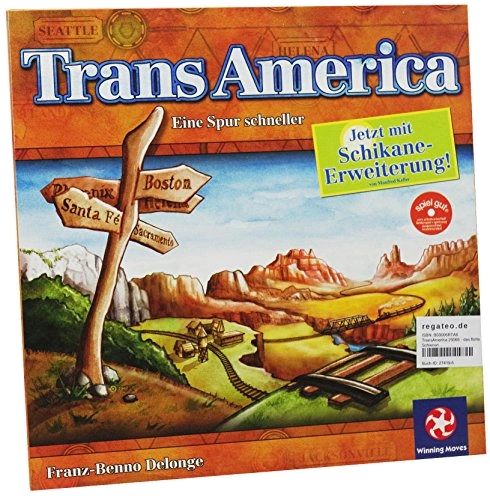
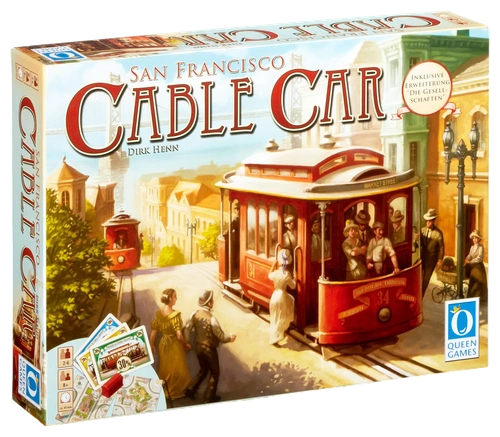
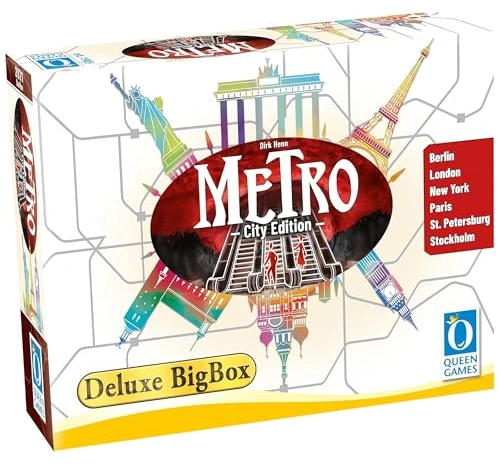
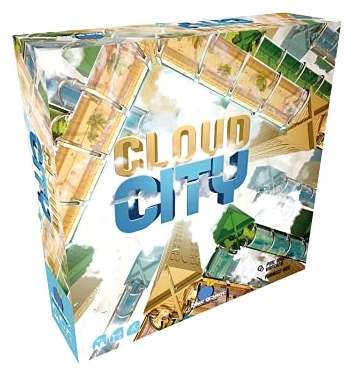

🪜 Love Metro? Ready for more – the staircase shows three games, each a little more demanding, and what each one adds.
Metro: common questions
- How many players is Metro for?
- Metro plays 2 to 6. Players say it works best with 2.
- Can you play Metro with two players?
- Yes. Players even rate two as the best count.
- How long does a game of Metro take?
- 30 minutes according to the publisher. A first game with the rules explanation usually runs longer.
- What age is Metro suitable for?
- The publisher recommends Metro for ages 8 and up.
- Is Metro hard to learn?
- The community rates its complexity 1.7 out of 5 — that is light.
- Is Metro language-dependent?
- No. The components carry no text; only the rulebook needs reading.
We like Metro so much that we recommend it in the following board game recommendation lists 2026
- Position 4 in The best games from Dirk Henn 🇩🇪👨
- Position 23 in The Best Games from Queen Games 🇩🇪🏢
- Position 4 in Best games released at SPIEL 1997 in Essen
- Position 5 in All "Spiel des Jahres🇩🇪 2000" game award winners & nominees in comparison