The best Chess variants ♟ 2026
You are looking for a good game that is similar to chess? Then we have just the thing for you: the list of the best chess variants 2026.
What are games similar to chess?
In this list you will find games that are based on or derived from the traditional public domain game Chess. The different chess variants or games similar to chess are for example. Xiangqi (also "Chinese Chess"), Shogi (also "Japanese Chess"), Changgi (Korean chess), Makruk (also "Thai Chess") and all other variants, extensions, spin-offs and chess derivatives.
By the way, in German "chess" is called "Schach".
List with the best chess variants 2026 ♟
-
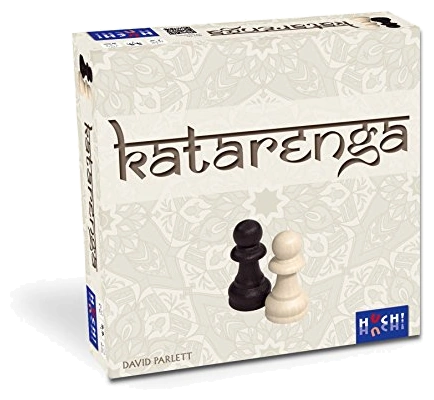
Katarenga
All details & ratingThe goal is to move two of your pieces past the opponent's baseline. This may sound simple, but your opponent is flexible and dangerous. The abilities of the pieces change from turn to turn, and success requires recognizing the advantages of four possible actions and strategically planning your moves.
2 20 min 8+ Easy to learn -
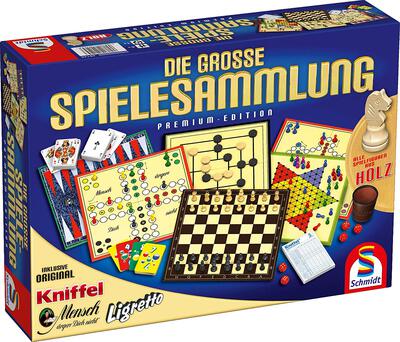
Miscellaneous Game Compilation
All details & ratingA placeholder entry for compilations of games released in a package. These typically include traditional or children's games collected in one box. Common examples include chess, checkers, backgammon, and "Ludo," among other notable titles.
0 Immediately playable -
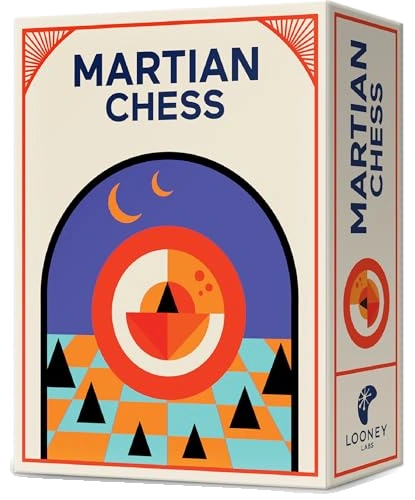
Martian Chess
All details & ratingMartian Chess is a game for 2-4 players that uses Icehouse pieces and requires each player to have their own supply and a chessboard. Similar to chess, players take turns moving and capturing pieces, with each type of piece having its own movement rules. Key differences include determining ownership by location rather than color, scoring based victories instead of capturing pieces, and the ability to play with up to six players using geomorphic chessboard sections.
2–4 20 min 8+ Easy to learn -
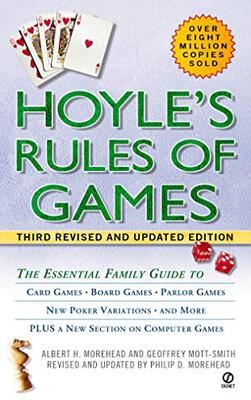
Hoyle's Games
All details & ratingOriginally created as a treatise on Whist published around 1742, later editions included additional games. The 10th edition, released in 1750, featured chapters on Quadrille, Piquet, Chess, and Backgammon. At least 20 different versions have been published over the years, making it the best-selling series on games in history.
1 8+ Medium complexity -
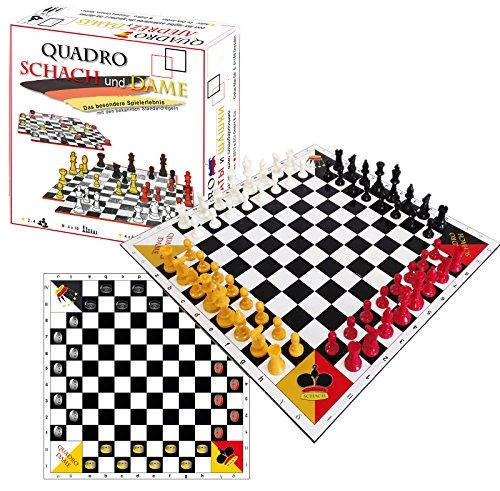
4 Player Chess
All details & ratingFour-player chess, often attributed to Captain Charles Verney who documented it in England in 1881, involves an expanded board and four complete sets of chess pieces in different colors. In Verney's version, players formed partnerships to try and checkmate both opponents simultaneously, while modern variants allow for various playing styles, including free-for-all and temporary alliances.
2–4 45 min 8+ Medium complexity -
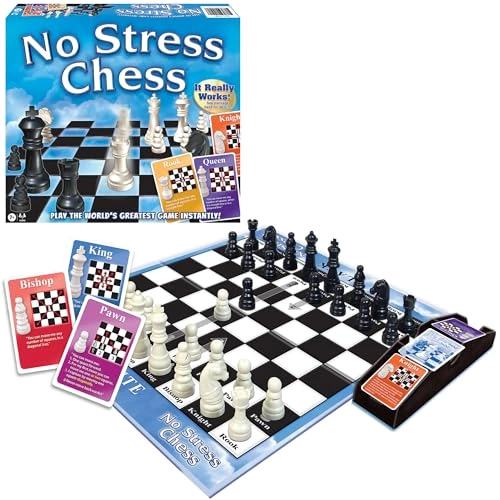
No Stress Chess
All details & ratingPlayers will be able to play chess immediately. Unlike other chess teachers, No Stress Chess uses illustrated cards and a two-sided board to teach players how the pieces move. The game includes a board with pieces and a card game that helps players learn the movements of chess pieces through different learning versions, using either 3 or 5 cards to move the pieces on the board.
2 60 min 7+ Easy to learn -
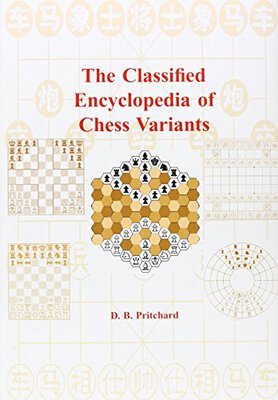
The Classified Encyclopedia of Chess Variants
All details & ratingThe book features around 1,400 chess variants and chess-related games, with detailed rules for non-proprietary games. It compiles a diverse range of games inspired by chess, some of which can be played with a standard chess set. The main aim is to entertain while also serving as a reference for students and enthusiasts of lesser-known variants.
2 45 min 8+ Medium complexity




Frequently asked questions
Which game ranks first on this list?
Katarenga currently tops our list. The ranking is derived from player community ratings and is recalculated continuously.
How many players do the games on this list support?
Most games on this list are designed for exactly 2 players. The exact player count is listed with each game.
What age are these games suitable for?
Publisher age recommendations on this list start at 7 years. Each game carries its own age rating.
How long does a game take?
A typical game takes about 45 minutes. Each game's playing time is listed individually.
Didn't find the game you were looking for?
We're positive that you'll find it in one of our other lists! To make the search easier for you, we split our website into different categories. The following board game categories will help you find the right list: